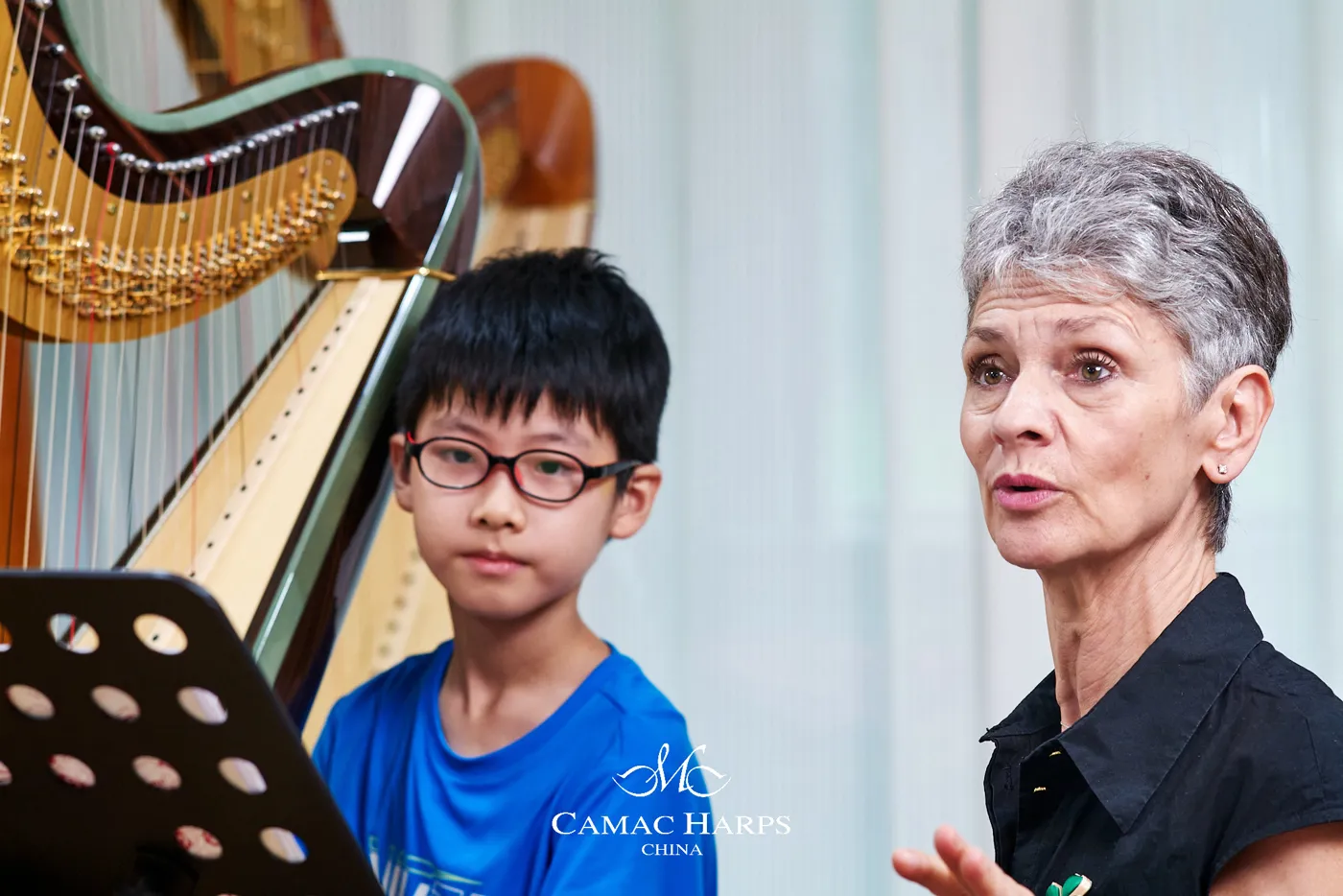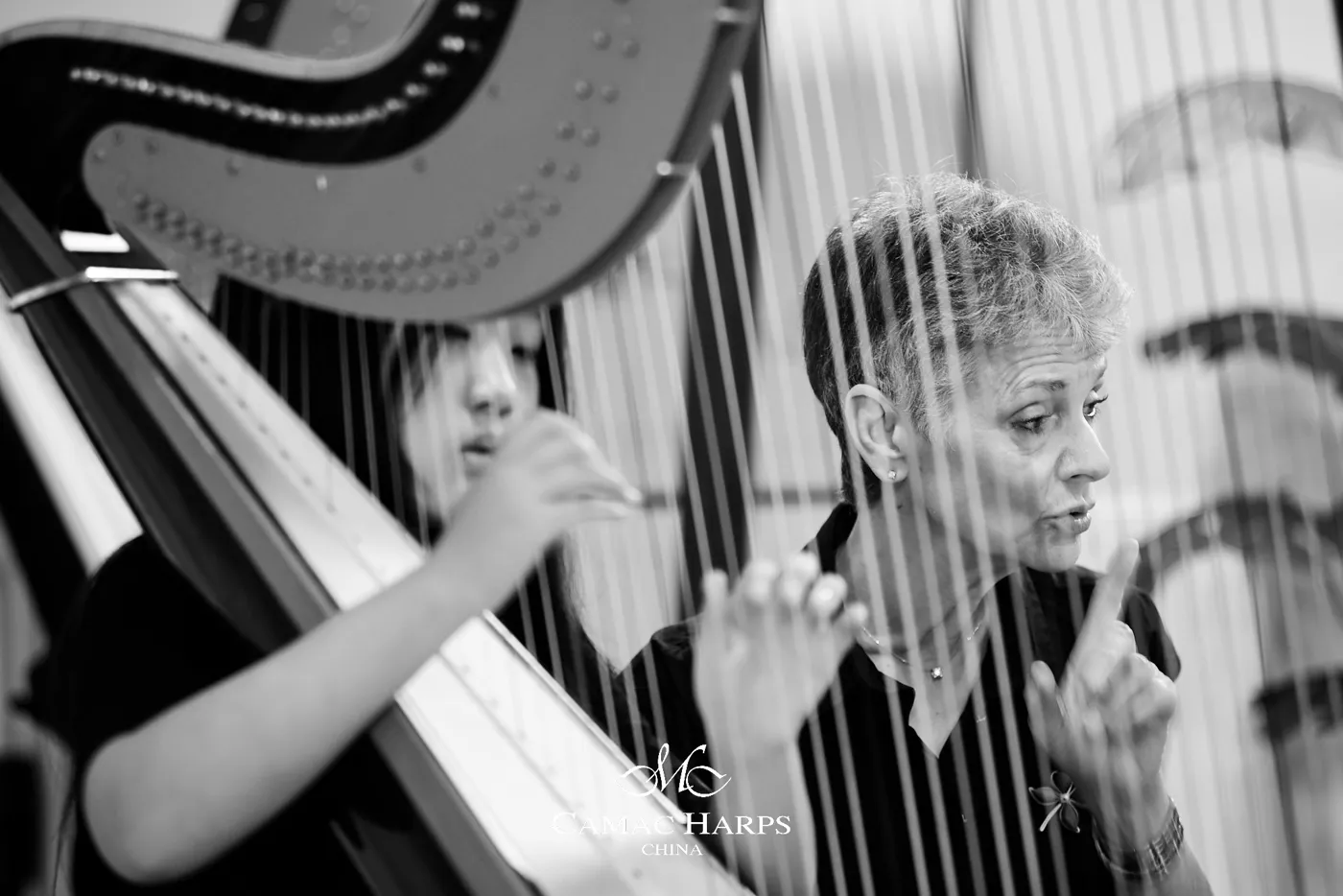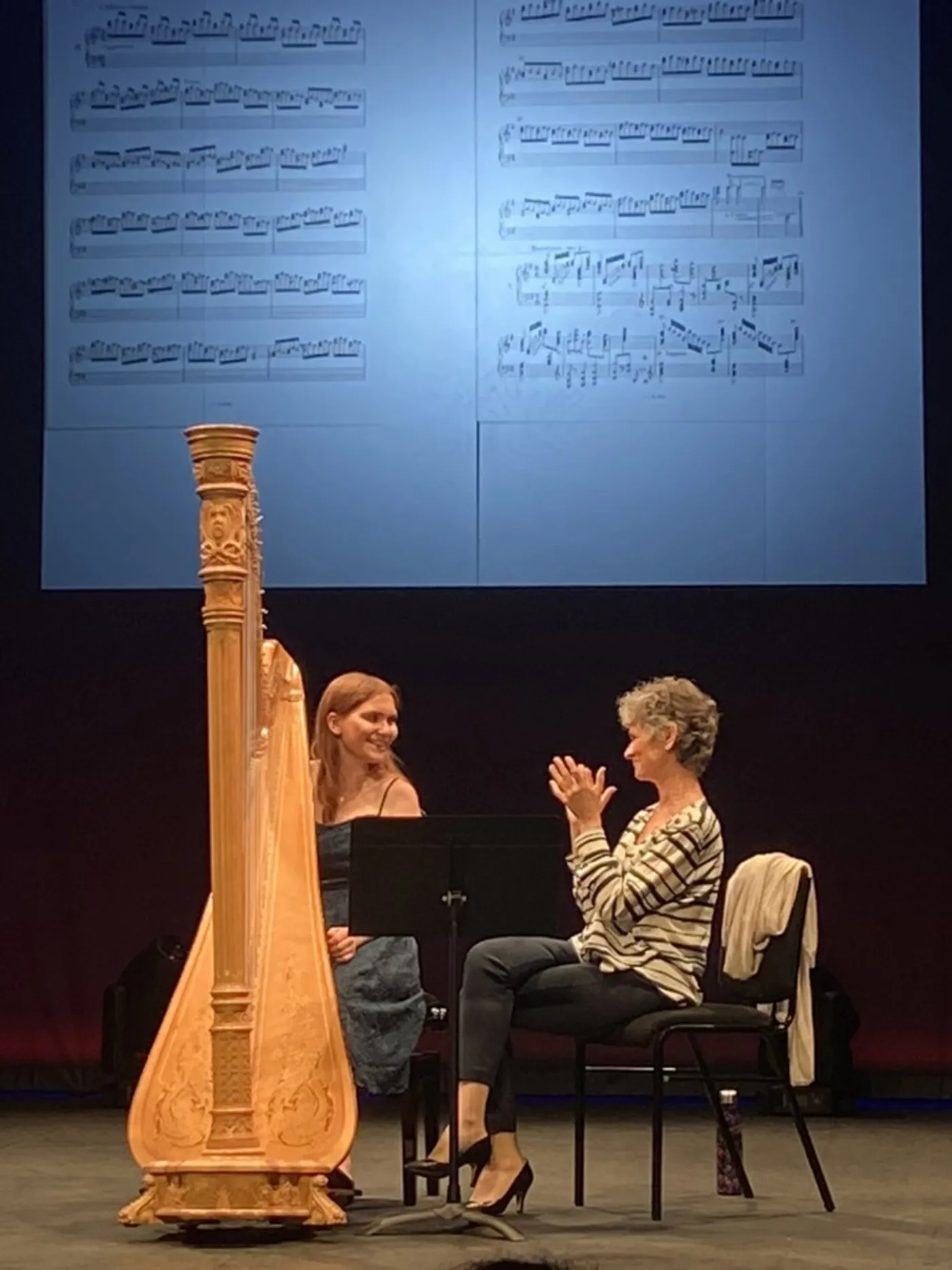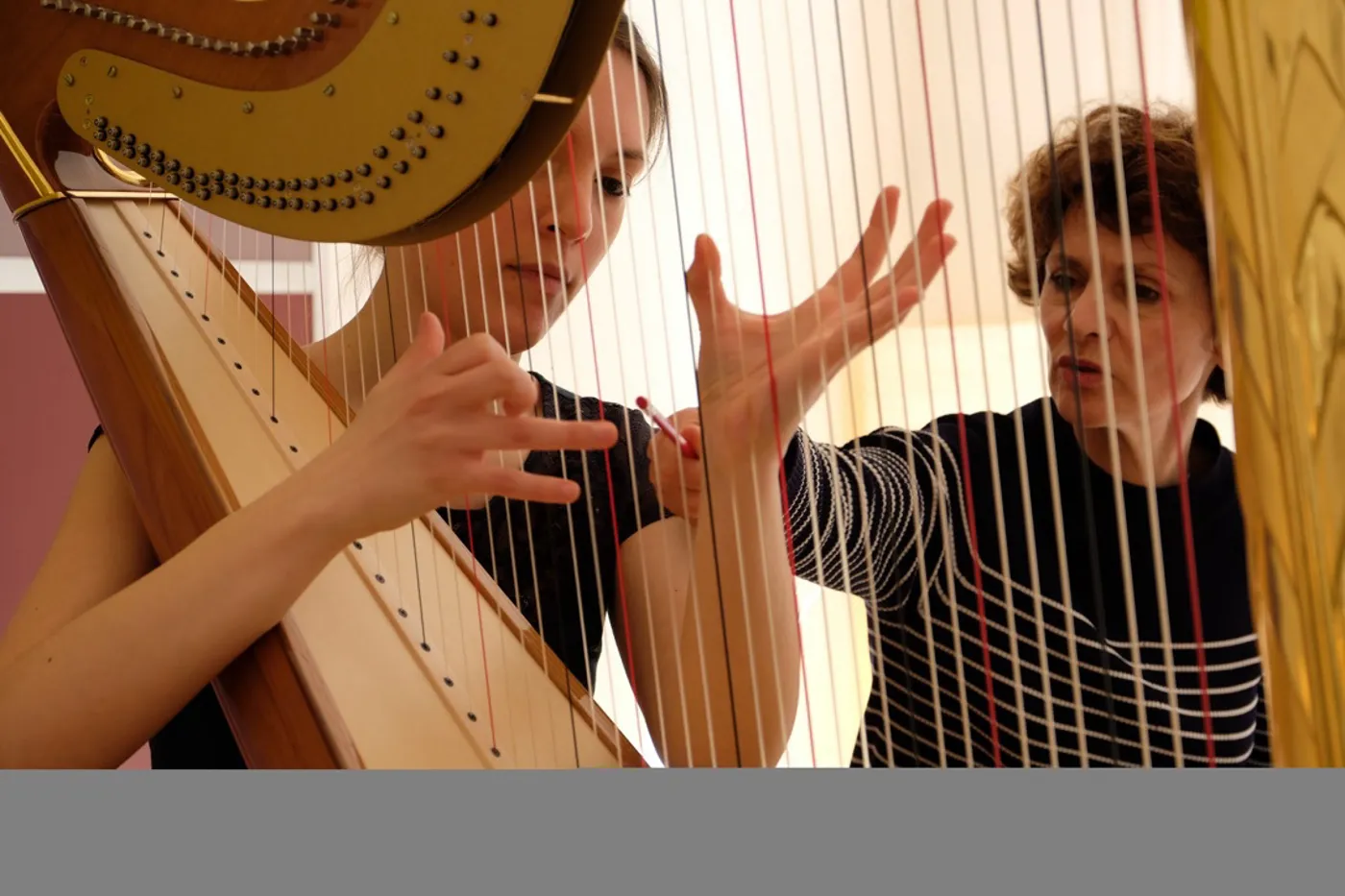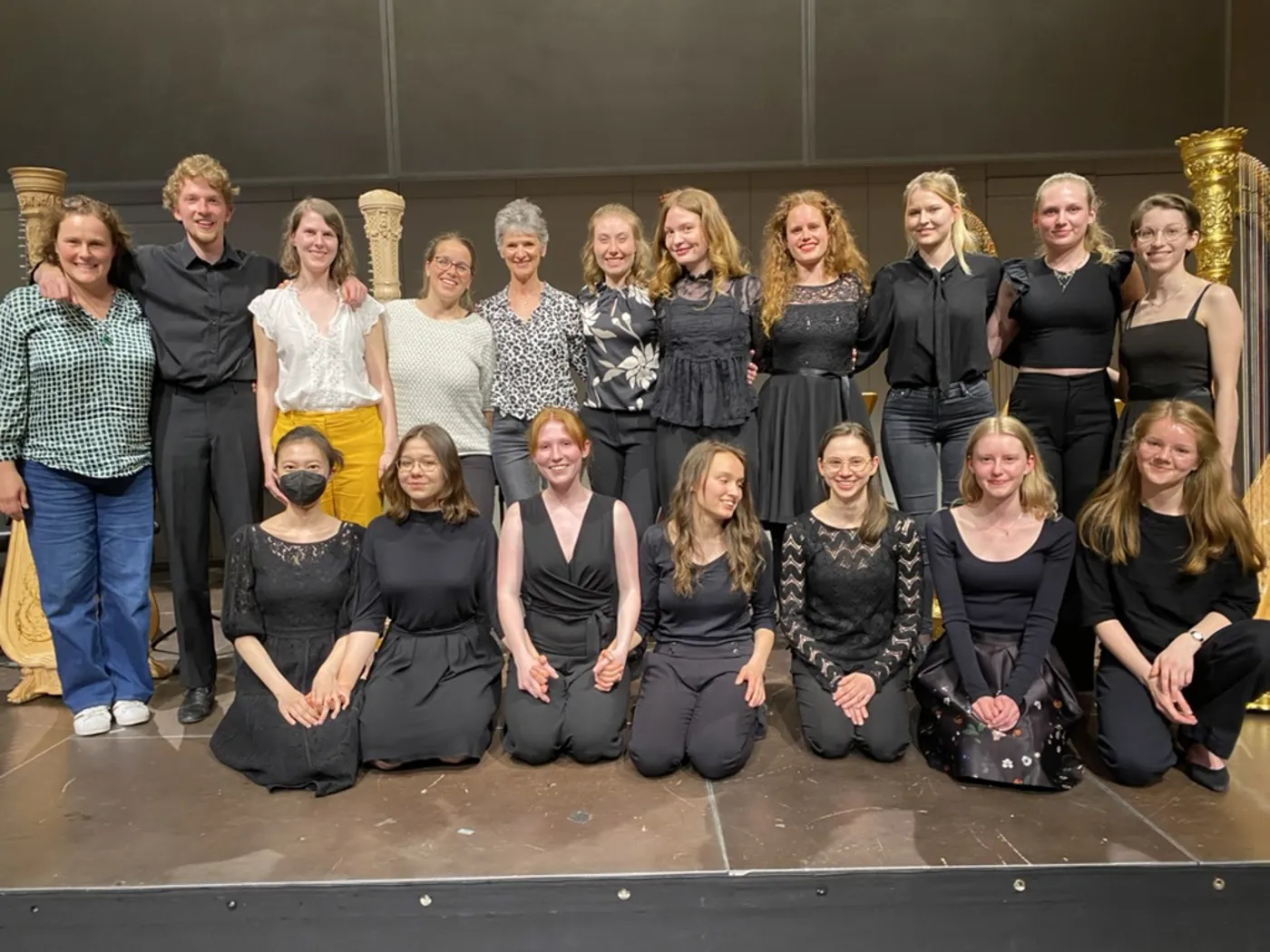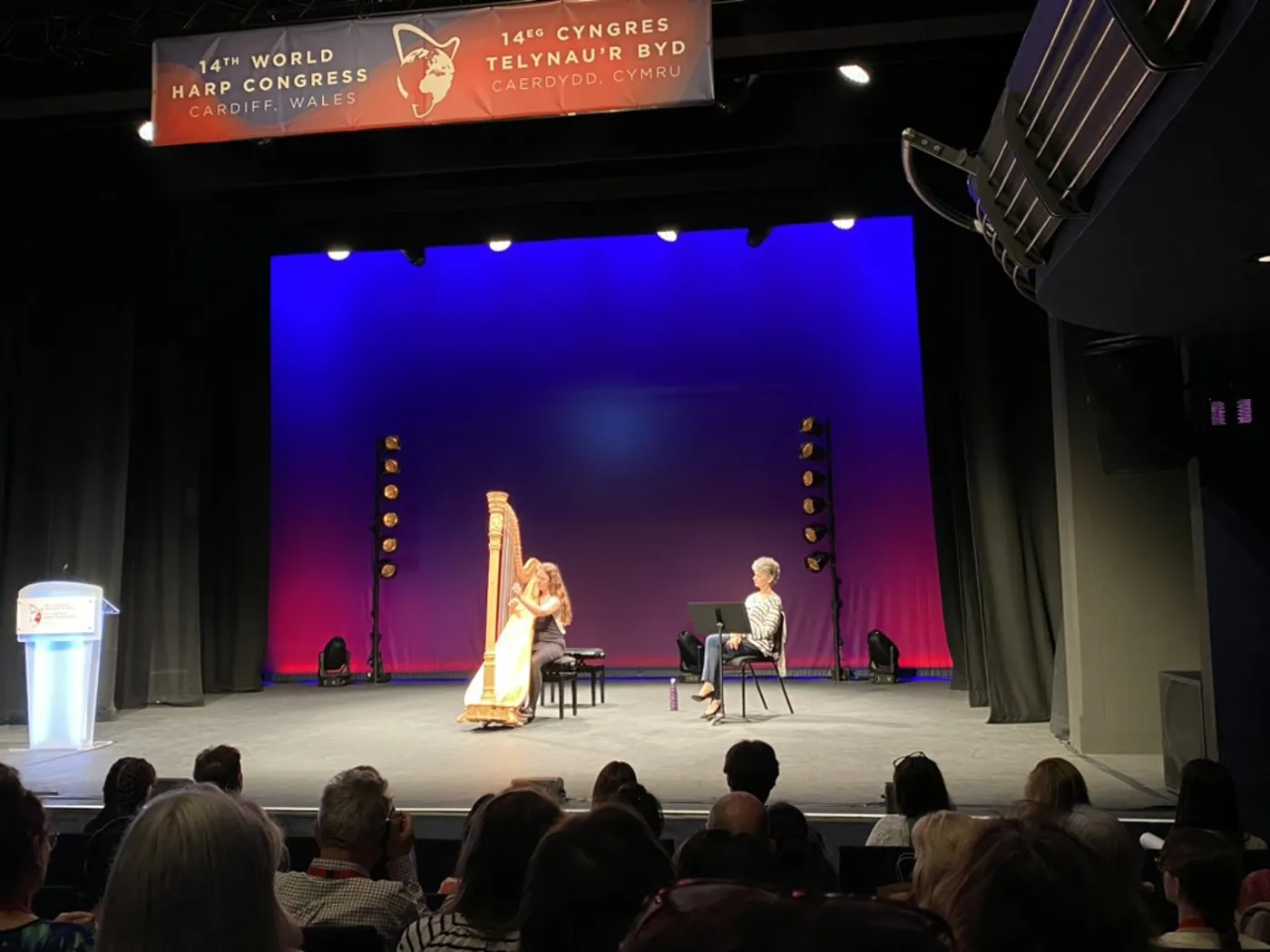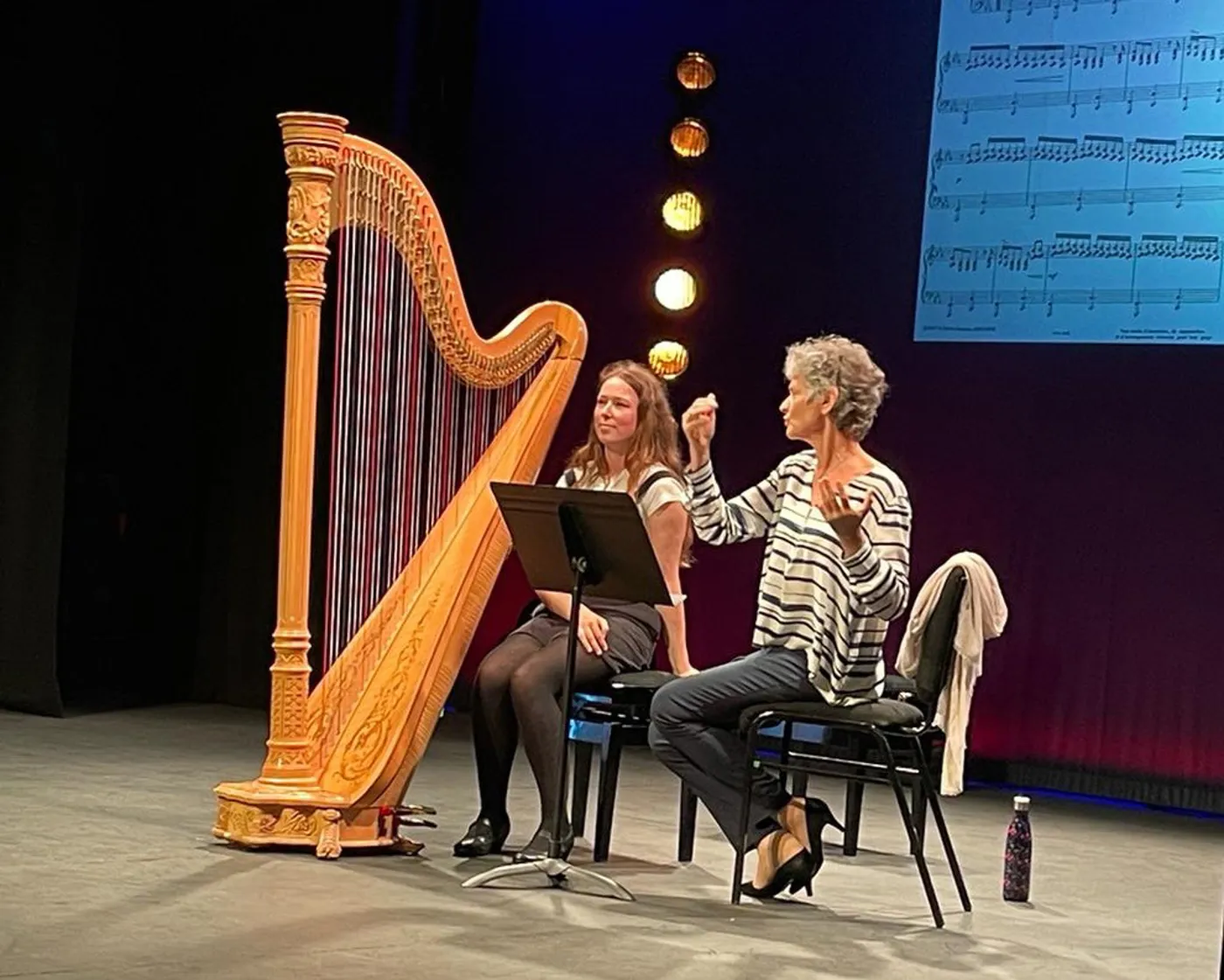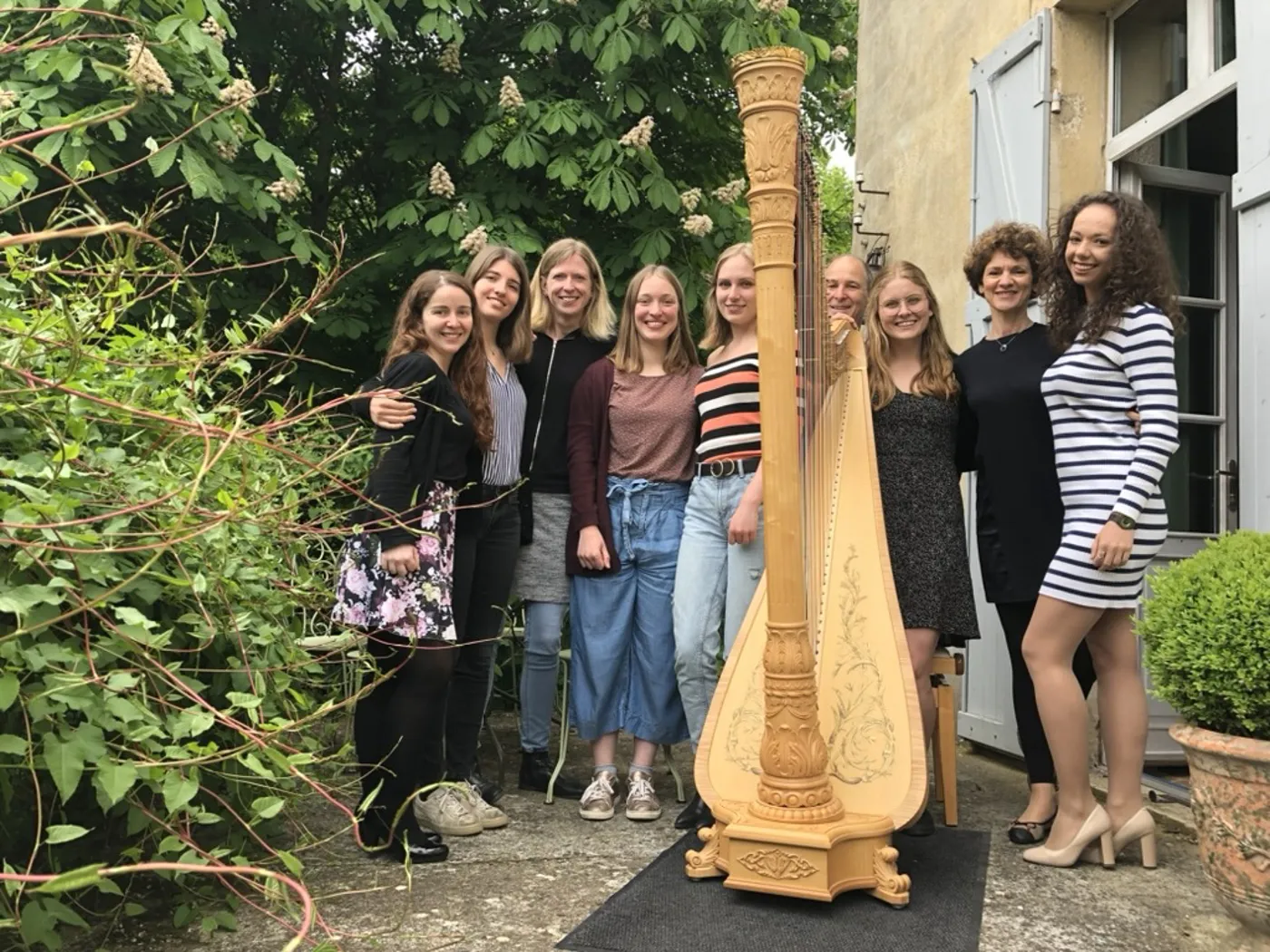

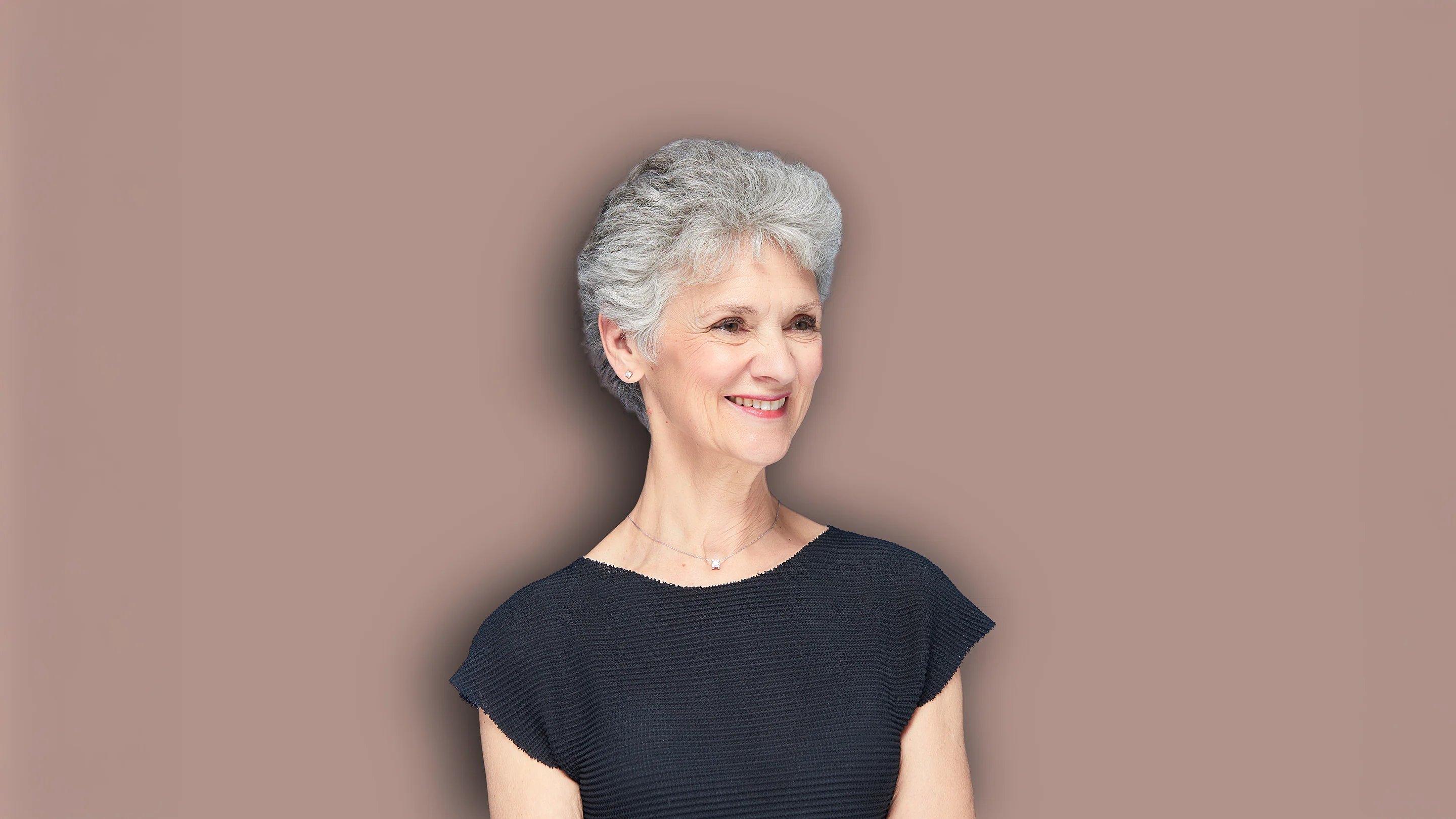
TEACHING
Teaching has always been part of my life since I started studying the harp at the Nice Conservatory at the age of ten. After just one year, my first teacher, Annie Fontaine, asked me to assist the younger students with their practice. Around the same time, I also began helping my younger brother with his music theory.
Teaching, the art of passing on knowledge, has always been a deep-rooted passion for me. And if there's one thing I can hardly imagine, it's a life without that connection to younger generations and the constant search for ways to help them grow, not just as musicians, but as individuals.
As part of my teaching practice, I also regularly give lectures on how French technique, French sound and French music are deeply interconnected and constantly influence one another.
Teaching French sound and French technique
As a French musician and harpist, I had never realized, when I was a young student, just how essential sound is to our playing — and how much it contributes to the identity of both French musicians and French music. When I began learning the harp, I was trained by two wonderful French teachers, fully rooted in the tradition of the French sound: the first, Annie Fontaine, from the Renié/Jamet school, and the second, Elizabeth Fontan-Binoche, from the Tournier school. I later continued my studies at the Juilliard School of Music in New York with Susann McDonald, and this thread was never broken — as Susann had herself studied in Paris with Henriette Renié. But it was above all when I became a teacher myself that I truly became aware of the deep connection between French sound and French technique. So, what is the “French sound”? Well, to put it simply, it is the art of coloring sound — in much the same way that many great French painters and composers work with colors. Yes, the way we place our hands, our fingers, the way we use (or not) our wrists — and how! — the way we close our fingers: all of these shape our sound. Even our sitting position at the harp plays a key role, because sound comes from the entire body — just as an athlete engages their whole body in every movement. But very often, we think it’s movement that helps us relax. Yet as Henriette Renié states so well in her method, movement is in fact only the result of released tension — and on its own, it cannot bring relaxation. So yes, of course, movement is essential. But it is only when it comes as the result of the release, never as a forced, unnatural, artificial one.
Depuis toujours, l’enseignement a fait partie de ma vie et tout a commencé lorsque, âgée de dix ans, j’ai débuté l’apprentissage de la harpe au Conservatoire de Nice. Après seulement un an d’étude, mon premier professeur, Annie Fontaine, m’a demandé d’aider les élèves plus jeunes dans leur travail. Parallèlement, je commençais aussi à accompagner mon petit frère dans l’étude du solfège.
L’enseignement, cet art de transmettre nos connaissances, a toujours été pour moi une passion ancrée au plus profond de moi. Et s’il y a une chose que je pourrais difficilement imaginer, c’est une vie sans ce contact avec les jeunes générations et comment trouver le moyen de les aider à se réaliser pleinement, non seulement comme musiciens mais aussi comme personnes.
Dans le cadre de mon enseignement, je donne aussi régulièrement des conférences sur la façon dont la technique française, le son français et la musique française sont si étroitement liés et s'influencent mutuellement.
L’enseignement de la technique et du son « français ».
En tant que musicienne et harpiste française, je n'avais jamais réalisé, lorsque j'étais jeune étudiante, à quel point le son était essentiel à notre jeu et combien il contribuait à l'identité des musiciens et de la musique française.
Lorsque j'ai commencé à étudier la harpe, j'ai été formée par deux merveilleux professeurs français dans la totale tradition du son français, la première, Annie Fontaine, venant de l’école Renié/Jamet et la seconde, Elizabeth Fontan-Binoche, de l’école Tournier.J’ai ensuite poursuivi mes études à la Juilliard School of Music, à New York, avec Susann McDonald et ce fil conducteur a été conservé, Susann ayant elle-même étudié à Paris avec Henriette Renié.
Mais c'est surtout en devenant moi-même professeur que j'ai pris conscience de la relation profonde entre son français et technique française.
Mais qu'est-ce que le « son français » ? Eh bien, pour le dire simplement, c'est l'art de colorer les sons, à la manière dont de nombreux grands peintres et compositeurs français travaillent les couleurs. Alors oui, la façon dont nous posons nos mains, nos doigts, la façon dont nous utilisons (ou non) nos poignets (et comment), la façon dont nous fermons nos doigts, tout cela façonne notre son. Notre position assise à la harpe y est aussi pour beaucoup, car le son provient de tout notre corps, tout comme un athlète implique tout son corps lorsqu'il effectue un mouvement.
Mais bien souvent, nous croyons que c’est le mouvement qui nous aide à nous détendre. Or, comme Henriette Renié nous l’explique très bien dans sa méthode, le mouvement n'est en fait que le résultat du relâchement de la tension et lui seul ne peut entraîner la détente.
Alors bien sûr, le mouvement est essentiel. Mais sans jamais être forcé ou artificiel, il doit naître d’une tension relâchée, et non d’un effort imposé.
In the musical world, there are teachers we call, with infinite respect, "master." Because they are excellent musicians? Obviously, but that's hardly enough... Because they are not only demanding in their expectations, but also because they know how to encourage, because they take into account the individuality of their students and offer each one a unique approach... and above all, because they are infinitely generous in sharing their experience and precious knowledge.
All these qualities, and this great generosity, are united in the person of this masterclass's guest of honor (let's not forget the French translation...), Isabelle Perrin, who, after having held numerous positions, is currently a harp professor and director of the string department at the Norges Musikkhøgskole in Oslo, Norway.
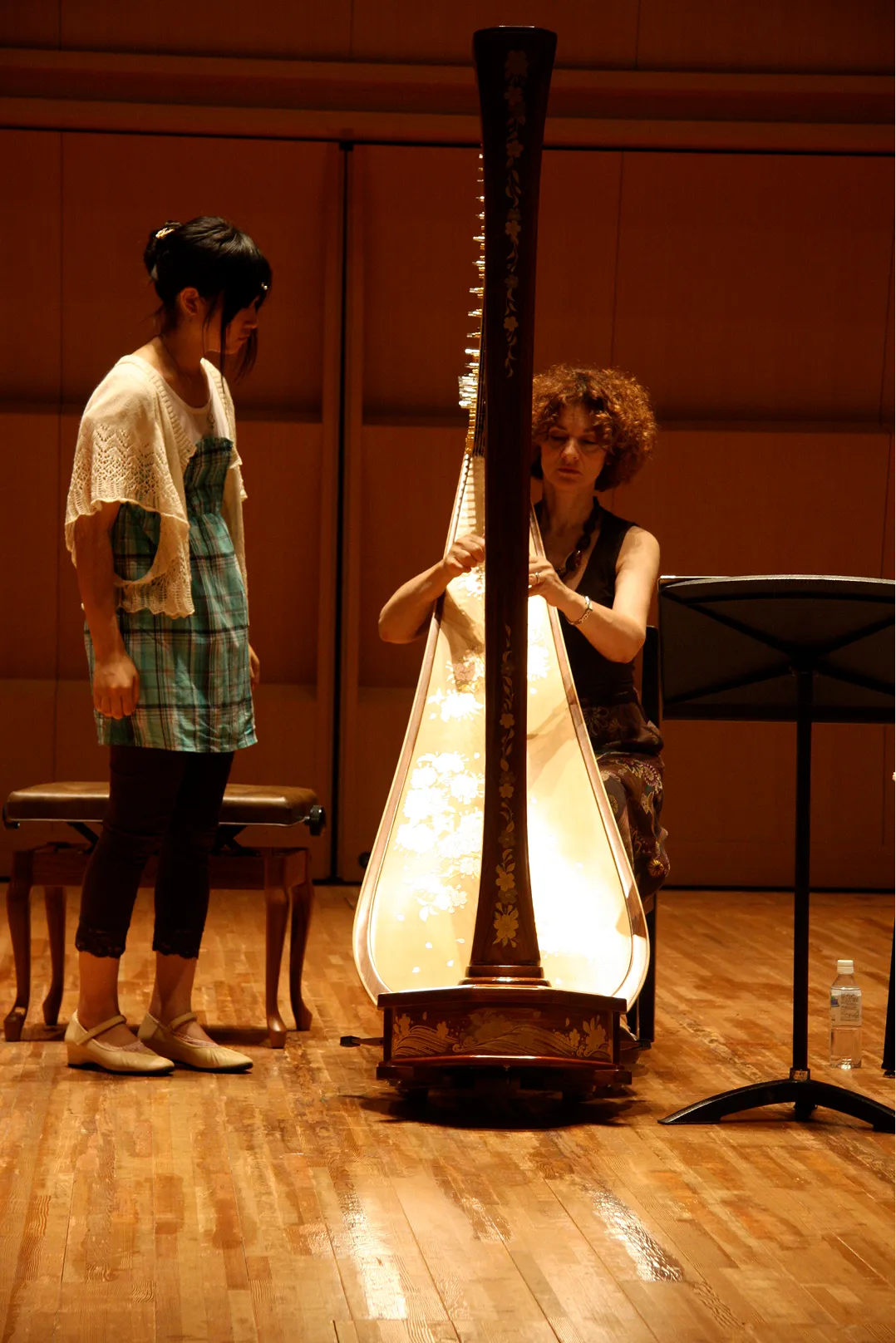
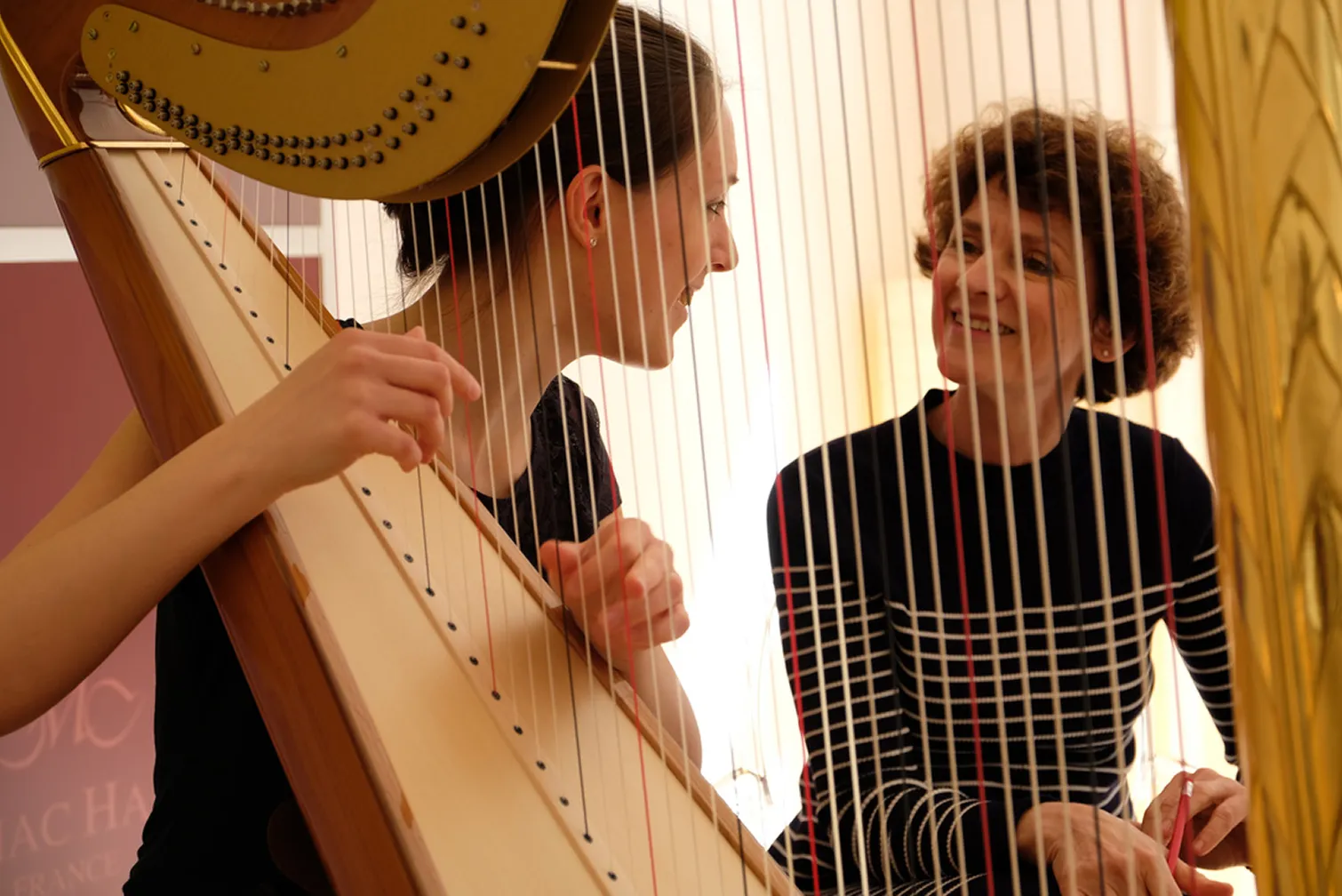
Far from being a simple one-on-one lesson focused on the interpretation of a work previously worked on, the masterclass often took on the form of a true group lesson. Each participant received tailored and personalized advice, but was also able to acquire, through listening to the lessons given to other students, a wealth of knowledge and effective working methods.
Over the course of these two days, an impressive number of topics were covered: the position and role of the body, the hands, the different types of articulation, the playing of the pedals... but also, more generally, and with a little perspective, working methods. How to memorize a piece and avoid memory lapses? (This session discussed the different types of memory: auditory, visual, muscular, analytical, and how to develop them.) How to correct a mistake that one systematically repeats? How to work on a particular type of technical difficulty? How do you know if you're ready to play a piece in concert?...
Master Isabelle Perrin deserves to be thanked for the wonderful teaching lesson she provided to the students and shared with the audience. She certainly motivated and inspired the young harpists to excel in the study of their instrument in the service of artistic expression.
Justine Jumez-Caro
Harpe en Avesnois, March 2025 Masterclass
Dans la vie musicale, il est des enseignants que l’on nomme, avec un infini respect : « maître ».
Parce qu’ils sont d’excellents musiciens ? Évidemment, mais cela n’est guère suffisant… Parce qu’ils sont non seulement exigeants dans leurs attentes, mais aussi parce qu’ils savent encourager. Parce qu’ils prennent en compte la personnalité de leurs élèves et offrent à chacun un accompagnement différent… et surtout, parce qu’ils sont infiniment généreux dans la transmission de leur expérience et de leur précieux savoir.
Toutes ces qualités, et cette grande générosité se trouvent réunies en la personne de l’invitée d’honneur de la masterclass (classe « de maître », n’oublions pas la traduction française...), Isabelle Perrin, qui après avoir occupé de nombreux postes, est actuellement professeur de harpe et directrice du département cordes à la Norges Musikkhøgskole à Oslo (Norvège).
Loin d’être l’occasion d’un simple cours particulier autour de l’interprétation d’une œuvre travaillée en amont, la masterclass a souvent pris les contours d’un véritable enseignement collectif. Ainsi chaque stagiaire a reçu des conseils adaptés et personnalisés, mais il a également pu acquérir, par l’écoute des cours dispensés aux autres étudiantes, de nombreuses connaissances et d’efficaces méthodes de travail.
Au fil de ces deux journées, un nombre impressionnant de points ont ainsi été abordés : la position et le rôle du corps, des mains, les différents types d’articulation, le jeu des pédales… mais aussi, de manière plus globale, et en prenant un peu de hauteur, les méthodes de travail. Comment mémoriser un morceau et éviter le trou de mémoire? (il fut ici question des différents types de mémoire : auditive, visuelle, musculaire, analytique, et des manières de les développer). Comment corriger une erreur que l’on reproduit systématiquement ? Comment travailler tel type de difficulté technique ? Comment savoir si on est prêt à jouer un morceau en concert ?…
Maître Isabelle Perrin peut être remerciée pour la formidable leçon de pédagogie prodiguée aux stagiaires et partagée avec le public. Elle aura assurément su motiver, et donné envie aux jeunes harpistes de se dépasser dans l’étude de leur instrument au service de l’expression artistique.
Justine Jumez-Caro
Harpe en Avesnois, March 2025 Masterclass



Isabelle has been the most profound influence in my journey as a student and as a person.
With kindness, honesty, and perseverance, she was able to motivate me like no other to push me beyond my limits and become the best version of myself. Her ability to challenge and support at the same time is truly rare, and it left a lasting impact on me. I will be forever grateful for having her in my life as a mentor and example.
Isabelle a eu une influence profonde sur mon parcours d'étudiante et sur ma vie personnelle. Avec sa gentillesse, son honnêteté et sa persévérance, elle a su comme personne me motiver à repousser mes limites et à devenir la meilleure version de moi-même. Sa capacité à me mettre au défi et à me soutenir à la fois est vraiment rare, et elle m'a profondément marquée. Je serai éternellement reconnaissante de l'avoir eue dans ma vie comme mentor et comme exemple.
I was fortunate to meet Isabelle in China, which gave me the opportunity to study with her in France. She opened the door to the world of harp for me, and from her, I learned the techniques and philosophy of the French school, which benefited me immensely. After completing my studies in France, I returned to China, but we have remained in close contact. Whenever I encounter challenges in performance or teaching, she is always the first person I turn to, and she never fails to give me the best advices. Over the years, Isabelle has regularly come to China to give masterclasses. She has witnessed the development of the harp in China and has helped generations of Chinese harpists.
J’ai eu la chance de rencontrer Isabelle en Chine, ce qui m’a offert l’opportunité d’aller étudier avec elle en France. Elle m’a ouvert les portes du monde de la harpe, et c’est grâce à elle que j’ai pu apprendre la technique et la philosophie de l’école française, dont j’ai tiré un immense profit. Après avoir terminé mes études en France, je suis retournée en Chine, mais nous sommes restées en contact étroit. Dès que je rencontre des difficultés dans mon jeu ou mon enseignement, elle est toujours la première personne à qui je m’adresse, et elle me donne toujours les meilleurs conseils. Depuis des années, Isabelle vient régulièrement en Chine pour donner des masterclasses. Elle a vu évoluer la harpe en Chine et a aidé toute une génération de harpistes chinois.
I will never forget my first lesson with Isabelle Perrin at the Gargilesse Easter course: I went back to my room and cried. She taught me in that lesson essential things that I had been trying to know and understand for a long time. And during the years I studied with her and every time she has listened to me afterwards, I always had that feeling that touches me deep inside. Great musician with a beautiful, open, sincere and generous personality, she taught me not only music but also how to fully live my own personality. No words are enough to express how lucky I was to know her.
Je n’oublierai jamais le premier cours avec Isabelle Perrin au stage de Pâques de Gargilesse. Je suis retournée à ma chambre et j’ai pleuré. Car elle m’a appris des choses essentielles que je cherchais à savoir depuis longtemps et durant mes années d’études avec elle, comme à chaque fois qu’elle m’écoute, je retrouve ce sentiment qui me touche au plus profond de moi. Grande musicienne avec sa belle personnalité ouverte, sincère et généreuse, elle m’a appris non seulement la musique mais aussi de vivre pleinement ma propre personnalité. Aucun mot n’est suffisant pour dire à quel point j’ai eu de la chance de la connaître.
I am immensely lucky to have had Isabelle Perrin’s guidance throughout the years. Her attention to detail and her uncanny ability to find just the right musical parallels pushed me to achieve my highest potential. Under her wing, I gained an understanding of the fine line between tasteful and excessive phrasing, of the importance of controlling every note, and how best to use technique to support rather than hinder musical expression. Her musical wisdom, though French at heart, is truly international, nourished by her extensive career playing and teaching all over the world.
J'ai eu l'immense chance d'avoir, au fil des années, bénéficié des conseils d'Isabelle Perrin. Son souci du détail et son incroyable capacité à trouver musicalement les justes parallèles m'ont permis d’atteindre mon plein potentiel. Sous son aile, j'ai compris la frontière subtile entre phrasé juste et phrasé excessif, l'importance de contrôler chaque note et comment utiliser au mieux la technique pour soutenir plutôt qu’entraver l'expression musicale. Sa sagesse musicale, même si française à cœur, est véritablement internationale, nourrie par sa longue carrière, jouant et enseignant dans le monde entier.
My experience that year in Oslo with Isabelle Perrin was really rich. I feel that I improved a lot not just the harp technic but my musical vision in general. She gave me an open mindedness and more knowledge about how to prepare an audition, how to find the right interpretation for many different styles of music. She gave me also a great support. I have learned to take care of my posture, how to have a play with natural breathing and a free body without tension. Isabelle Perrin is amazing and I am really lucky to have had those lessons with her.
Mon expérience durant cette année passée à Oslo avec Isabelle Perrin a été vraiment enrichissante. J'ai l'impression d'avoir beaucoup progressé, non seulement sur le plan technique de la harpe, mais aussi sur ma vision musicale en général. Elle m'a apporté une ouverture d'esprit et des connaissances supplémentaires sur la préparation d'une audition et sur la façon de trouver la bonne interprétation pour différents styles de musique. Elle m'a également apporté un soutien précieux. J'ai appris à soigner la position de mon corps, à jouer avec une respiration naturelle et à garder le corps libre et sans tension. Isabelle Perrin est incroyable et j'ai eu beaucoup de chance d’avoir ces cours avec elle.
Since I first met Isabelle Perrin when I was 14 years old, she has been a true inspiration for my musical life. She taught me how to become musically autonome and how to approach my work professionally and at the highest levels. She represents for me a lifelong mentor, always really precious for every artist's path.
Depuis ma première rencontre avec Isabelle Perrin à l'âge de 14 ans, Isabelle a été une véritable source d'inspiration pour ma vie musicale. Elle m'a appris à devenir autonome musicalement et à aborder mon travail avec professionnalisme et au plus haut niveau. Elle représente pour moi à jamais mon mentor, si précieux pour chaque artiste.
I was fortunate to benefit from Isabelle Perrin's teaching during my Master's programs in Oslo and Paris. She was much more than a teacher; she was a true mentor in my artistic life, and she still is today. Her invaluable advice and kindness allowed me to develop and gain the confidence to fully flourish as a musician. Her dedication and passion for teaching are a true source of inspiration!
J’ai eu la chance de bénéficier de l’enseignement d’Isabelle Perrin durant mes années de Master à Paris ainsi qu’à Oslo. Elle a été pour moi bien plus qu’un professeur, une véritable Mentor dans ma vie artistique et elle l’est toujours aujourd’hui. Ses précieux conseils et sa bienveillance m’ont permis de me forger, de gagner en confiance pour m’épanouir pleinement en tant que musicienne. Son dévouement et sa passion de l’enseignement sont de véritables sources d’inspiration !
If there was ever something in my life that felt like destiny, it was my meeting with Isabelle. It wasn’t always easy, but not a day goes by without me drawing on the advice and experience I gained from her. She taught me so much — about music, about the harp, about life. Thanks to her, I discovered my true musical identity; thanks to her, I am able to pass on my love for music and my experience to my students — and even with them, I still turn to Isabelle when I need guidance. Isabelle is an absolutely unique and exceptional person, and I am truly grateful that I had the opportunity to study with her and that she is part of my life. She is a huge role model for me, and I deeply admire her.
S'il y a une chose dans ma vie qui m'a semblé être le destin, c'est bien ma rencontre avec Isabelle. Mon parcours n'était pas toujours facile, mais pas un jour ne se passe sans que je profite de ses conseils et de son expérience. Elle m'a tant appris – sur la musique, sur la harpe, sur la vie. Grâce à elle, j'ai découvert ma véritable identité musicale ; grâce à elle, je peux transmettre mon amour de la musique et mon expérience à mes élèves – et même avec eux, je continue de me tourner vers Isabelle lorsque j'ai besoin de conseils. Isabelle est une personne absolument unique et exceptionnelle, et je suis profondément reconnaissante d'avoir eu l'opportunité d'étudier avec elle et de l’avoir dans ma vie. Elle est un immense modèle pour moi et je l'admire profondément.
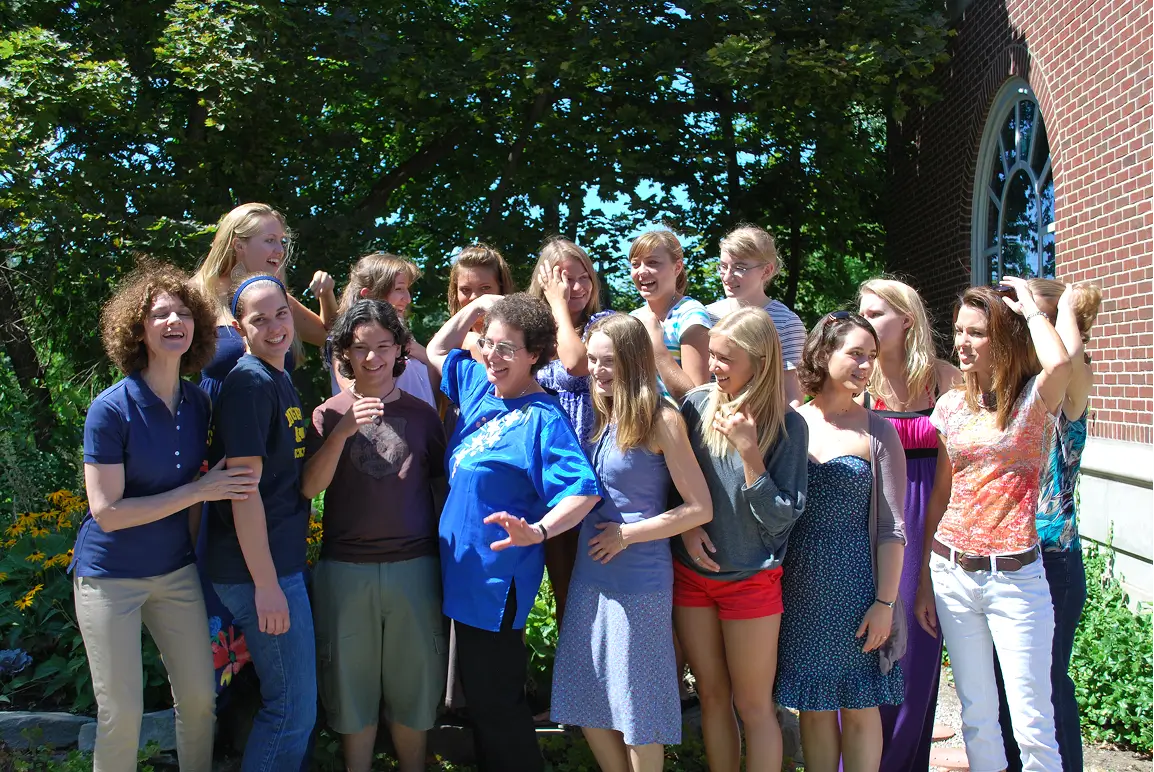
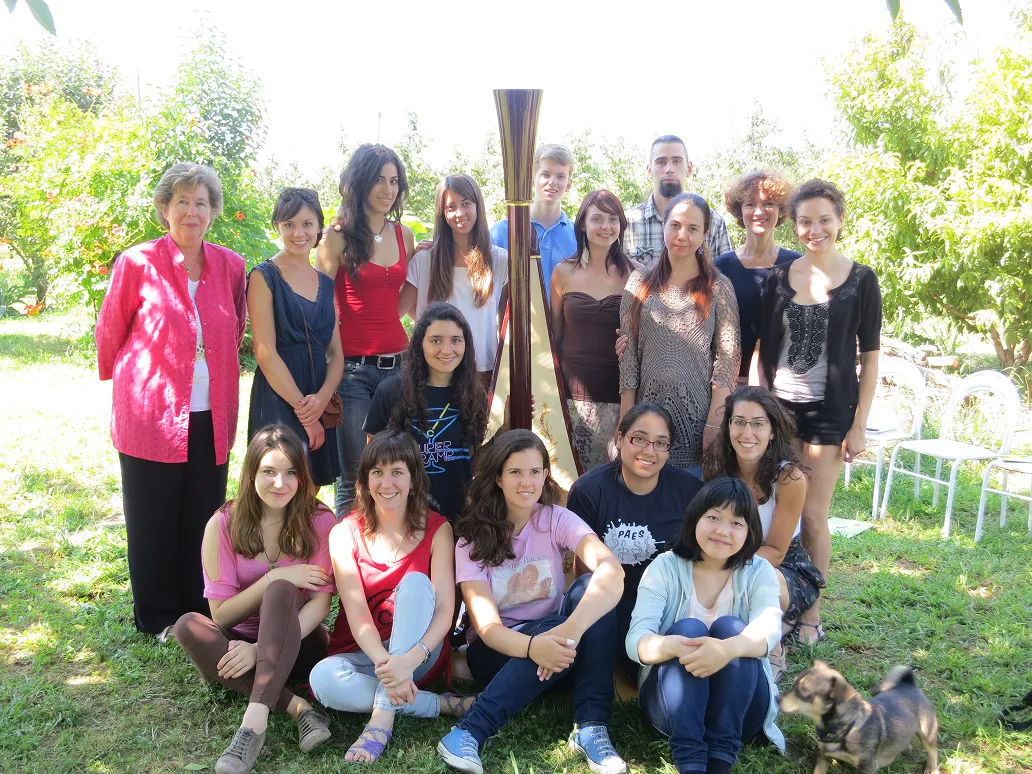
SUMMER COURSES
Scandinavian Harp Course in Valdres, Norway
We are pleased to announce that the 7th Scandinavian Harp Course will take place from June 19–24, 2026, as part of the Summer Academy in Valdres, Norway.
The course will focus on orchestral auditions as well as posture, including Alexander Technique classes.
The registration deadline is February 15, 2026. As the number of participants is limited, early registration is highly recommended.
Nous sommes heureux d’annoncer la 7ᵉ édition du Scandinavian Harp Course, qui se déroulera du 19 au 24 juin 2026, dans le cadre de l’Académie Internationale de Valdres, en Norvège.
Le cours sera dédié à la préparation des concours d’orchestre et inclura des cours de posture basés sur la technique Alexander.
La date de clôture des inscriptions est fixée au 15 février 2026. Les places étant très limitées, il est vivement recommandé de s’inscrire rapidement.
Académie Musicale Pierre Jamet
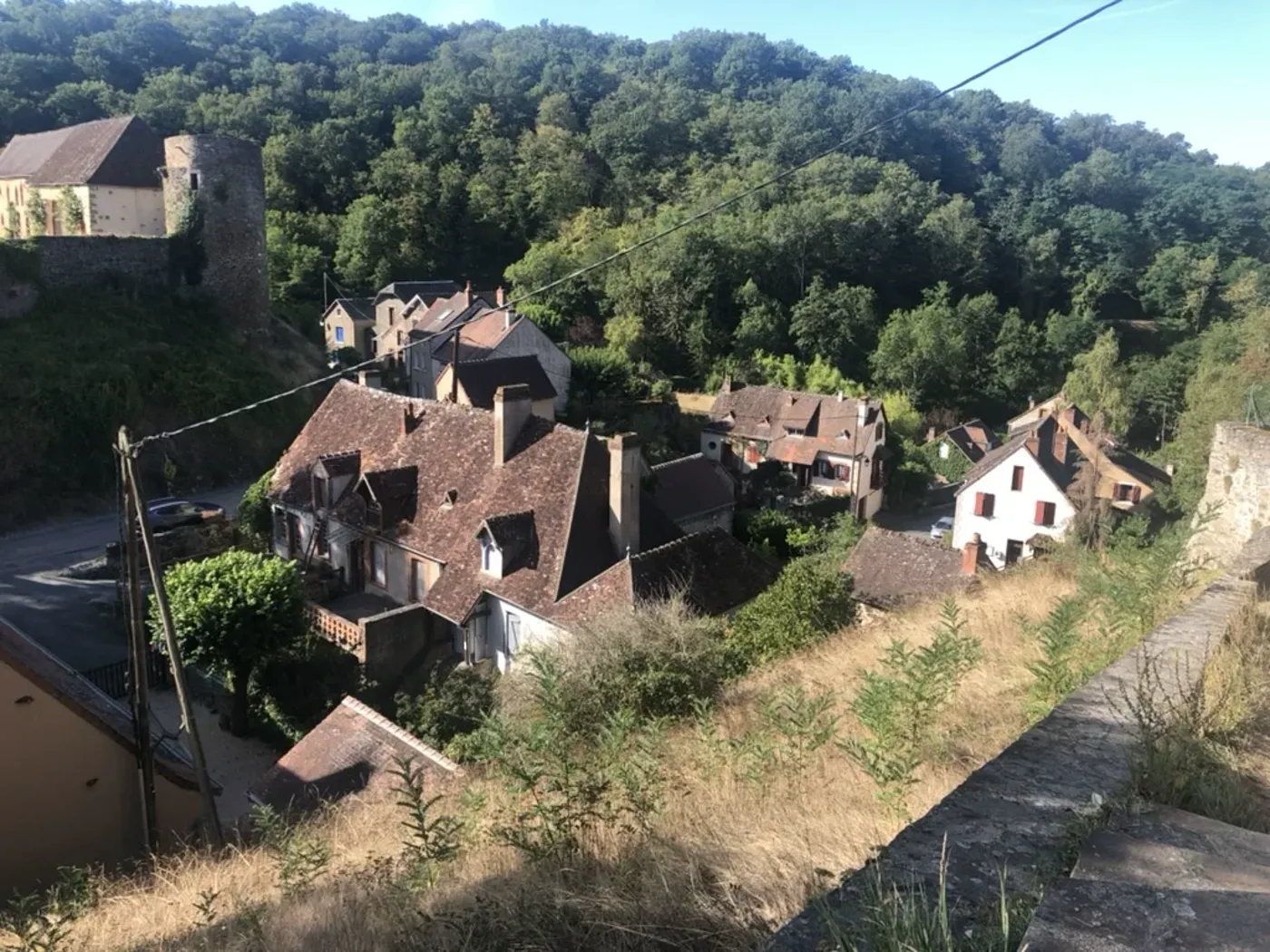
The name Pierre Jamet is forever linked to that of Gargilesse. The summer festival, created by Pierre Jamet, renowned harpist, professor at the Paris Conservatoire National Supérieur de Musique et de Danse, and founder of an International Harp Academy, has become a veritable institution for all lovers of this musical instrument. As an educator, Pierre Jamet founded the International Association of Harpists and Friends of the Harp in 1962.
Le nom de Pierre Jamet est lié pour toujours à celui de Gargilesse. Le festival d’été, créé par Pierre Jamet, harpiste de renom, professeur au Conservatoire National Supérieur de Musique et de Danse de Paris et initiateur d’une Académie Internationale de Harpe, est devenu une véritable institution pour tous les amateurs de cet instrument de musique. Pédagogue, Pierre Jamet fonde en 1962, l’Association Internationale des Harpistes et Amis de la Harpe
Gallery